Newsom Proved Them Wrong
Why the Bay Area Doesn't Need a New Transit Tax

When Bay Area transit leaders are backed into a corner, they rely on a familiar, patronizing refrain: “The public just doesn’t understand how transit funding works.”
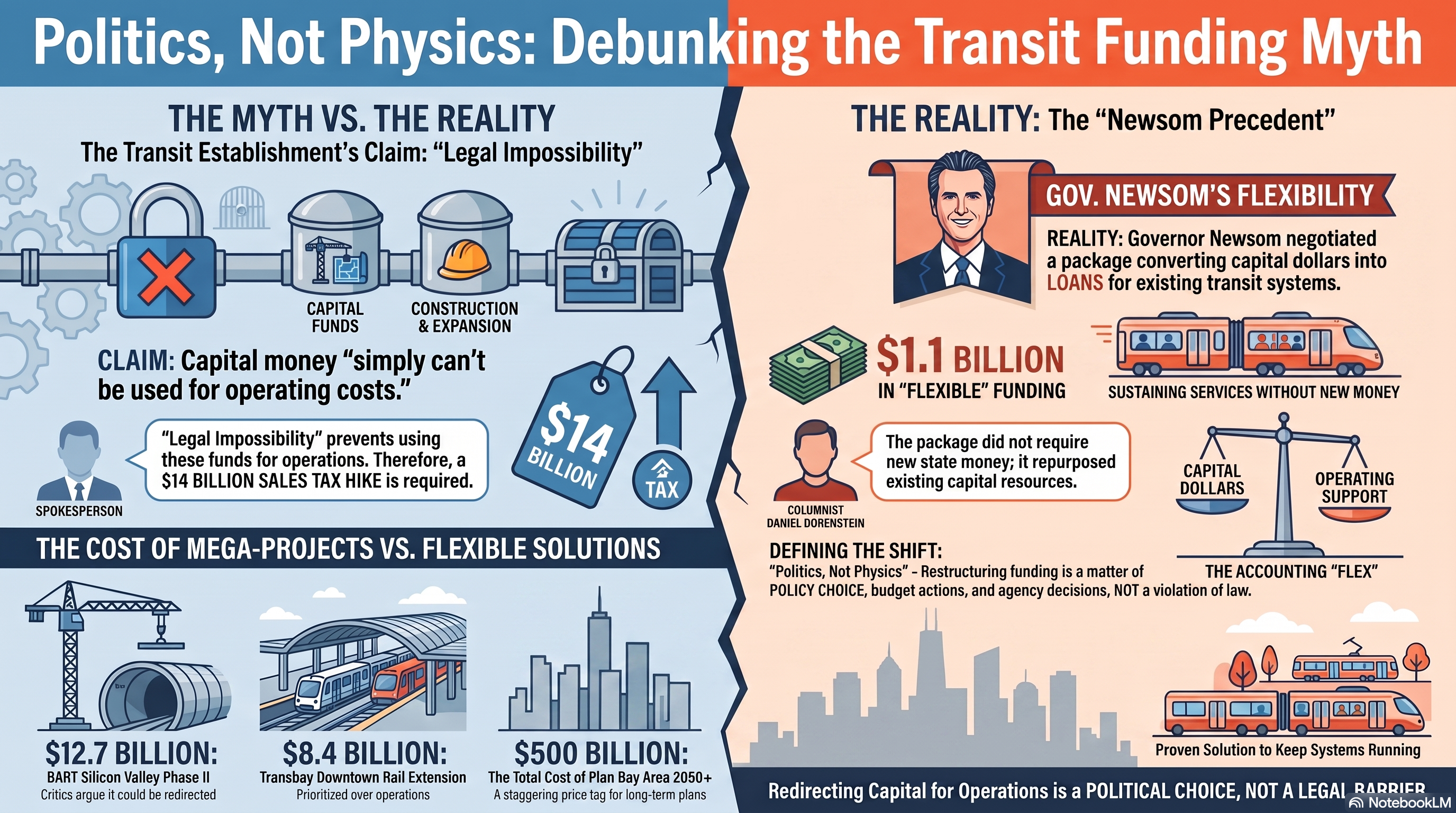
The Transit Establishment’s condescension was on full display when the Committee for Affordable Bay Area Transit suggested a commonsense alternative to the region’s transit budget crisis: pause bloated capital mega - projects - like the $12.7 billion BART Silicon Valley Phase II (the San Jose extension) or the $8.4 billion Transbay Downtown Rail Extension or the High-Speed Rail Project - and reallocate those existing local and state funds to keep current transit operations running.
The False Claim
The transit establishment’s response was swift, arrogant, and entirely dismissive. In KQED’s recent reporting on the Connect Bay Area Act, campaign spokesman Jeff Cretan dismissed proposals to redirect money from major capital projects toward transit service.
According to the article, he argued that most capital money “simply can’t be used for operating costs” and that “it doesn’t work like that.”
This is a highly convenient narrative if your goal is to guilt the public into passing a $14 Billion sales tax hike this November. There is just one glaring problem: it is an absolute, demonstrable lie. And voters do not need to look back decades to prove it - The State of California already demonstrated that this claim is not true earlier this year…
They Already Did It
Earlier this year, Newsom negotiated a financing package allowing Bay Area transit agencies to borrow hundreds of millions of dollars from state funds that had already been allocated for transit capital projects.
The largest share of those capital dollars had originally been reserved for construction of the San Jose BART extension. Instead, they became the source of loans designed to keep existing transit systems operating.
As columnist Daniel Borenstein observed, the package did not require new state money. It relied on capital funds that had already been committed to construction projects, temporarily converting those resources into operating support through a loan structure.
The accounting mechanism may have been creative.
But the result was unmistakable.
Capital resources were used to sustain operations.
Exactly the scenario transit advocates now insist cannot happen.
This Wasn’t an Isolated Exception
Nor was Newsom’s action unprecedented.
California’s 2023 - 24 state budget created what legislators themselves called “flexible transportation funding”.
Transit agencies were explicitly allowed to “flex” selected transportation funding into operating purposes to prevent immediate service reductions.
Those provisions reportedly allowed roughly $1.1 billion in transportation funding - including certain capital - related funding sources such as Cap-and-Trade revenues - to support operating expenses including vehicle operations, maintenance, and service preservation over multiple years.
At the same time, the budget restored approximately $4 billion for long - term transportation capital investment.
In other words, Sacramento simultaneously demonstrated two things:
• Capital investment remains important.
• Capital funding can, when policymakers choose, be restructured to support operations.
That is precisely what has occurred.
Politics, Not Physics
Of course, many federal grant sources cannot be rewritten overnight. Federal funding frequently carries statutory restrictions. Certain state programs also have legal limitations. No serious analyst argues otherwise.
But many of the largest transportation investments involve substantial state and local funding, regional allocations, flexible revenues, or future project commitments that governments routinely restructure through legislation, budget actions, financing agreements, or agency decisions.
As veteran transit finance expert Tom Rubin explained in his response to the tax proponent claims in the KQED story, the practical question is often not whether funding can be redirected, but whether political leaders are willing to do so. He identified multiple examples of major Bay Area capital programs containing state or local funding that could potentially be reprogrammed, at least in part, if policymakers made different priorities.
Reasonable people may disagree over whether those projects should be delayed.
They cannot honestly claim that shifting funding is impossible.
The Debate Voters Deserve
There are arguments for continuing to build major transit expansions despite today’s operating deficits. There are also arguments for preserving existing service before beginning multi - billion - dollar expansion projects. There are also arguments that current transit approaches are inefficient, inconvenient, and blocking a transition to agile & affordable emerging technologies.
That is a policy debate.
What is not legitimate is presenting the issue as though the law of public finance leaves no alternative.
Governor Newsom’s own financing package demonstrated otherwise.
When transit agencies faced a fiscal emergency, California found a way to convert capital resources into operating support.
Whether that approach was wise is open to debate.
Whether it happened is not.
The Real Question
The November campaign should therefore focus on the real issue.
Not whether capital funding can ever support operations.
It already has.
Or whether this tax measure is really needed to fund inefficient transit operations.
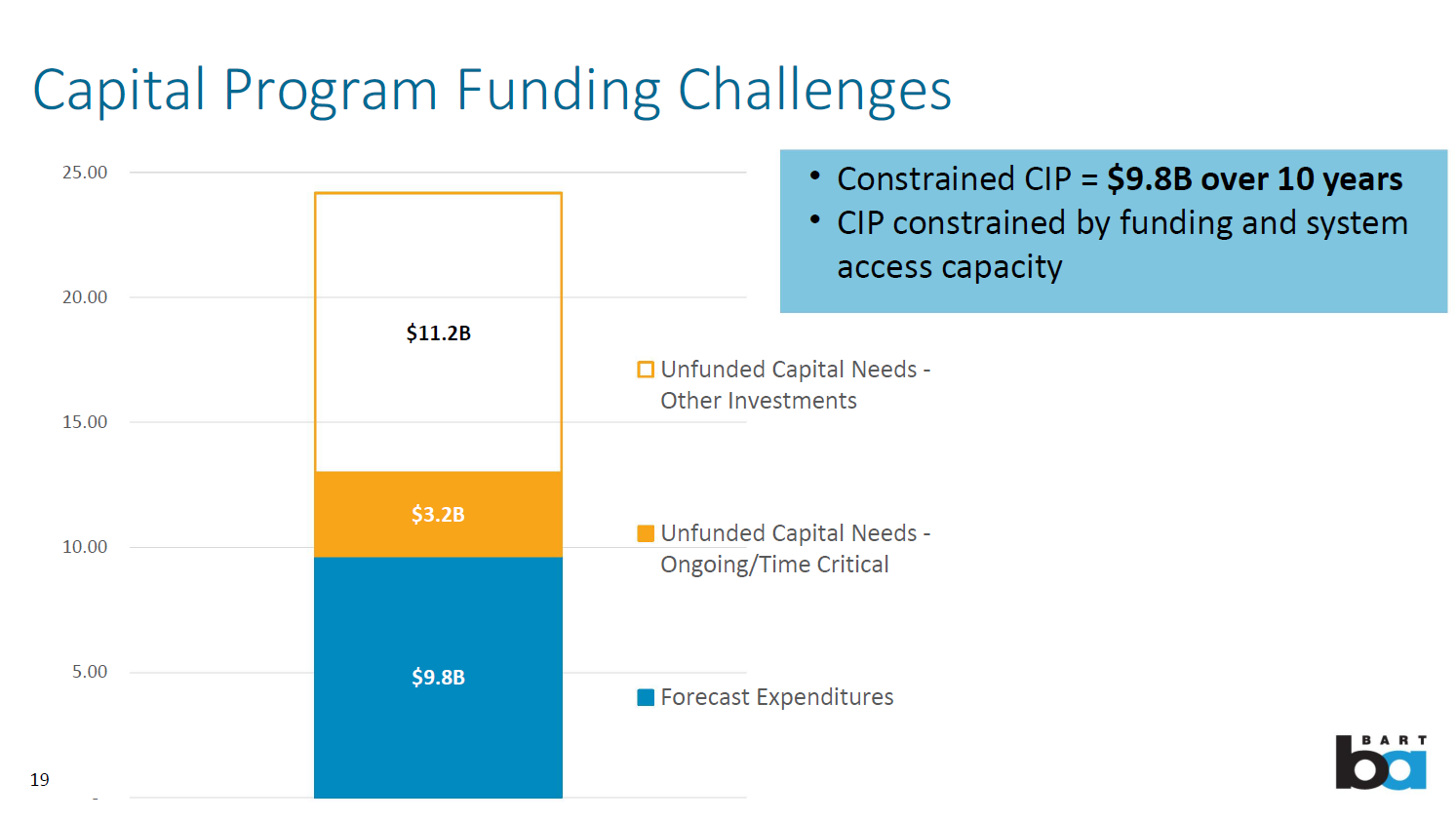
The real question is whether Bay Area transportation in its current form is worth preserving, at a cost of $500 Billion, as laid out in Play Bay Area 2050+. BART alone has asked for $24.3 Billion over just the next 10 years.
That is a debate worth having.
But it should begin with an accurate statement of the facts - not a deception that the State of California itself has already disproved.
Gregg Dieguez
Committee for Affordable Bay Area Transit